
Protein, made smarter.
Cultivating protein diversity for a secure, sustainable, and resilient future of food
The alternative protein sector is at the forefront of global food innovation, with major benefits for people, planet, and profit. Also called smart proteins, these foods taste the same or better and cost the same or less than their animal-derived counterparts, with vastly lower impacts on planetary and public health.
GFI India* is the leading expert on India’s emerging smart protein sector. We provide strategic market intelligence, ecosystem development support, and sector-focused advisory to institutional, academic, business, and civil society stakeholders across the smart protein value chain. Our team of experts across science, business, and policy helps our partners unlock the knowledge and resources needed to transform how meat is made—satisfying rising food demand in ways that accelerate climate progress, protect animals and ecosystems, and strengthen public health.
 Plant-based meat
 Cultivated meat
 Fermentation
*GFI India refers to the brand name used by Alternative Protein Solutions Pvt. Ltd. (APSPL).
What are smart proteins?
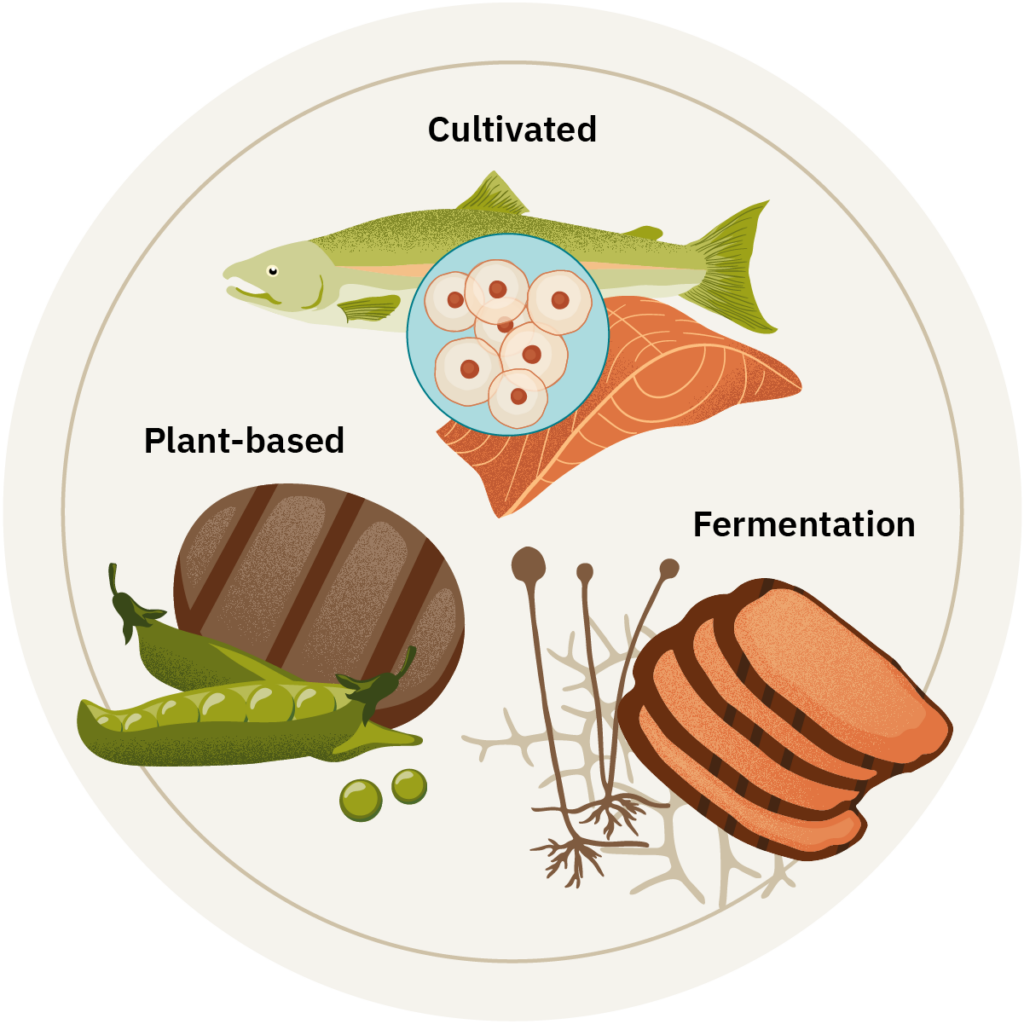
Smart proteins include meat, eggs, and dairy made from plants, cultivated from animal cells, or produced via fermentation. They are as delicious, affordable, and nutritious as conventional meat, but without the climate and public health implications. These proteins require fewer inputs, such as land and water, and generate far fewer negative externalities, such as greenhouse gas emissions, pollution, and other public health risks. Numerous plant-based and fermentation-derived options are available to consumers today. Other products, such as cultivated meats, remain primarily in development.
Here’s how we do it.
At The Good Food Institute India, we believe that small-scale farmers, indigenous crops, low-cost technologies, and self-reliant biomanufacturing will be key to the success of alternative proteins. We conduct and disseminate high-impact research including market insights, and provide critical advisory support to public sector stakeholders, entrepreneurs, researchers, large food and biotech corporations, civil society, universities, and other partners across the smart protein value chain.
GFI India’s team of experts across science and technology, business, and policy works to build the smart protein sector from the ground up. We build pivotal networks, conduct and disseminate high-impact research, and provide critical advisory support.
By working with governments, entrepreneurs, researchers, large food and biotech corporations, civil society, universities, and other partners across the smart protein value chain, we’re putting sustainable protein on the menu.
Strengthen innovation and market development

We work with companies throughout the smart protein supply chain to identify the most impactful business activities that will grow their bottom line and strengthen the commercial viability and market readiness. We analyse the market to identify white spaces and emerging opportunities, providing actionable market intelligence and consumer insights.
The next generation of alternative proteins will eventually compete with conventional animal products on the key drivers of consumer choice: taste, price, and convenience.
Translate research into smart protein innovation

We generate scientific insights and identify research priorities across plant-based, cultivated, and fermentation-derived proteins, with a focus on the technical challenges and opportunities most relevant to India.
Our research and knowledge partnerships help translate emerging science into actionable intelligence for researchers, industry, and other stakeholders working on smart protein innovation. We also work with academic institutions, industry, and scientific experts to strengthen industry-relevant R&D and talent pathways.
Provide technical advisory and institutional support

We serve as a trusted knowledge partner to public sector institutions, academia, and civil society. By offering scientific and technical advisory, we assist decision-makers in navigating the technological advancements of the smart protein sector. We share market insights and technical frameworks to support the development of transparent, science-based regulatory pathways, helping build India’s sustainable food future.
Dig into our work

Cultivated meat: India’s action plan 2026
In collaboration with the Bezos Centre for Sustainable Protein at North Carolina State University and the CSIR-Innovation Complex, our closed-door stakeholder roundtables on cultivated meat brought together perspectives from entrepreneurs, researchers, manufacturers, and ecosystem partners from India.

Crop optimisation report
This whitepaper outlines 10 priority R&D areas and presents stakeholder-specific recommendations for food and agricultural scientists, industry and government scientific agencies, and funding bodies.

State of the Industry report 2023
Access insights into the state of the smart protein industry in India, including the commercial landscape, consumer and investment insights, technical advancements, and regulatory updates.

Smart protein repository
Discover ideas for your R&D work in plant-based, fermentation-derived, and cultivated proteins.

Regulatory guides
Check out our informative suite of regulatory resources, co-developed with our Regulatory Advisory Council members, to help keep you informed on the various regulatory developments in India’s smart protein sector.
Recent updates

Local crops, global scale
Insights from GFI India and GFI APAC’s Alt Protein Dialogues webinar about leveraging Asia’s indigenous crops for alternative protein product development.

Sneha’s podcast with The Signal Brief
In this episode, Sneha discusses India’s indigenous crops and how the right R&D and processing infrastructure can unlock their potential for smart protein production.

What academia and industry need to solve together for India’s smart protein future
Gather insights from the talent symposium conducted with CSIR-CFTRI, which brought together academic and industry voices to explore how Indian academia can contribute to the growth and innovation in smart proteins.

India has ingredients to become an alternative protein manufacturing hub
In an interview with HBL, Sneha discusses how India can draw on its agricultural diversity, technical talent, and manufacturing strengths to develop competitive smart protein value chains while creating new opportunities for farmers, FPOs, MSMEs, researchers, and food manufacturers.